
Losing a tooth isn’t just a cosmetic problem. It affects how you chew, how you speak, and even how your other teeth line up over time. So when it comes to replacing that missing tooth, you’ve got a big decision to make. Two options come up more than any others: dental implants and dental bridges. Both fill the gap. Both restore your smile. But they work very differently. And what’s right for one person might not be right for another.
Let’s break down the pros, cons, and key differences so you can choose with confidence.
What’s a Dental Bridge?
A dental bridge does exactly what its name suggests. It “bridges” the gap where your missing tooth used to be. We create a custom restoration with a false tooth in the middle. On either side, crowns fit over your neighboring teeth. Those crowns anchor the bridge in place, so the false tooth sits right where it belongs.
The Pros:
- It’s faster. Most bridges can be completed in just a couple of appointments.
- It’s less invasive than surgery. No drilling into your jawbone.
- It’s usually less expensive upfront than an implant.
The Cons:
- It requires grinding down healthy neighboring teeth to fit the crowns.
- It doesn’t replace the tooth root, so the jawbone underneath can shrink over time.
- It can be harder to clean. Food gets trapped under the false tooth.
- It typically needs replacing every 10 to 15 years.
What’s a Dental Implant?
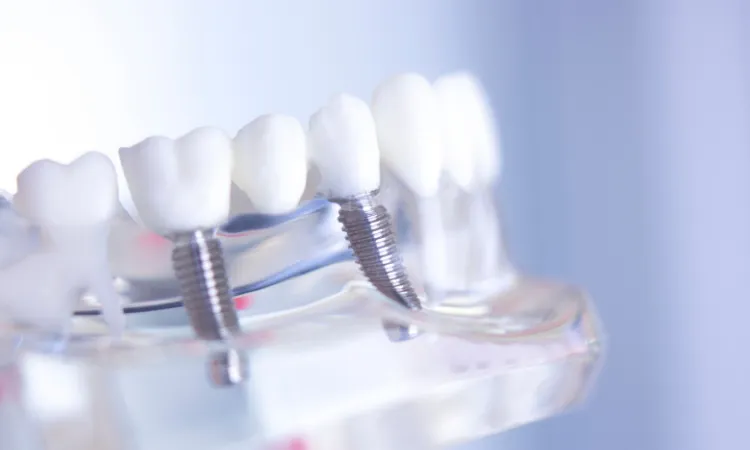
A dental implant is a different approach entirely. Instead of resting on neighboring teeth, it replaces the entire tooth, root and all. Your dentist in Owings Mills, MD, surgically places a small titanium post into your jawbone. Over the next few months, that post fuses with your bone, creating a rock-solid foundation. Then a custom crown gets attached on top.
The Pros:
- It looks and feels like a natural tooth.
- It doesn’t touch your neighboring teeth.
- It replaces the tooth root, which helps prevent jawbone loss.
- With proper care, it can last a lifetime.
- You clean it just like a normal tooth. No special tools needed.
The Cons:
- It requires surgery.
- The process takes longer. Usually several months from start to finish.
- It costs more upfront.
- Not everyone is a candidate. You need enough healthy jawbone to support the implant.
So Which One Is Right for You?
The “best” option depends on your situation, your health, and your goals.
A bridge might be a better fit if:
- You want a faster, less invasive solution.
- You’re not a candidate for implant surgery.
- You’re on a tighter budget upfront.
- The teeth next to your gap already need crowns anyway.
An implant might be a better fit if:
- You want the most natural-looking, longest-lasting solution.
- You want to avoid damaging your healthy neighboring teeth.
- You’re concerned about jawbone loss.
- You’re willing to invest more time and money for a permanent fix.
What About Cost?
A bridge usually costs less upfront. But it typically needs replacing every decade or so. Over 20 or 30 years, those replacements add up. An implant costs more initially. But it can last a lifetime. So over the long haul, it often ends up being the better value.
Many dental insurance plans cover part of both options. We’ll help you understand your coverage and figure out what works for your budget.
Why Not Just Leave the Gap?
You might be tempted to skip treatment altogether. But when you lose a tooth, your other teeth start drifting into the empty space. Your bite changes. Your jawbone shrinks. Chewing gets harder. And your risk for gum disease goes up.
Filling that gap isn’t just about looks. It’s about protecting your long-term oral health.
Let’s Talk About Your Options
At Owings Mills Dental Care, we offer both bridges and implants. And with Dr. Doroshenko’s advanced prosthodontic training, we’re equipped to handle even complex cases.
Not sure which option is right for you? Give us a call or request an appointment online. We’ll walk you through the pros and cons, answer your questions, and help you decide with confidence.